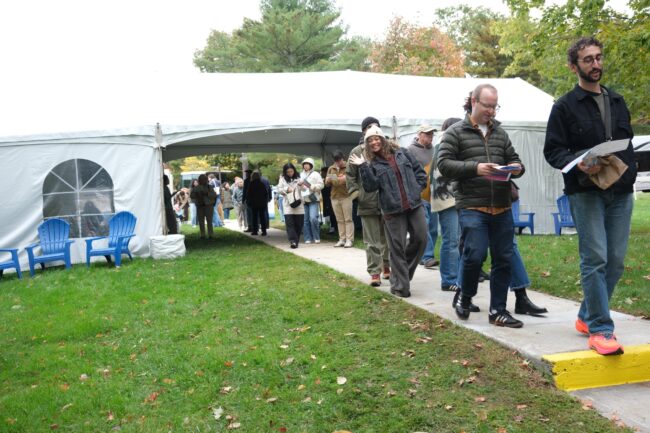
PALISADES, N.Y. – More than 2,500 people crossed the Hudson to Columbia University’s Lamont-Doherty Earth Observatory on Saturday, October 17, for the institution’s 2026 Open House, a free, day-long festival of earth science that traces its roots to as early as 1949.
Under crisp autumn skies, families, students and curious neighbors wandered the observatory’s wooded campus in Rockland County, trying hands-on experiments, peering at samples gathered from the ocean floor and sitting in on talks by the scientists who study the planet for a living.
Science you can touch
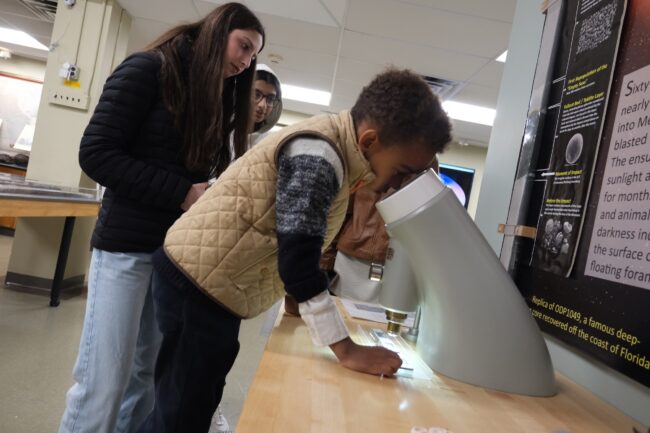
Many of the day’s biggest crowds gathered around the experiments. At the Lamont Core Repository, described by the observatory as the most extensive collection of marine sediment and rock samples anywhere, visitors examined some of the more than 20,000 cores that researchers and educators around the world use to reconstruct Earth’s climate history.
Elsewhere, children kneaded a “glacial goo” of glue and Borax, using toothpicks to see why ice moves faster at the center of a glacier, where there is less friction. Others tested how many microscopic particles they were carrying around in a “personal cloud”. According to the organizers, the dirtiest result of the day did not belong to a child but to a Lamont postdoctoral researcher.
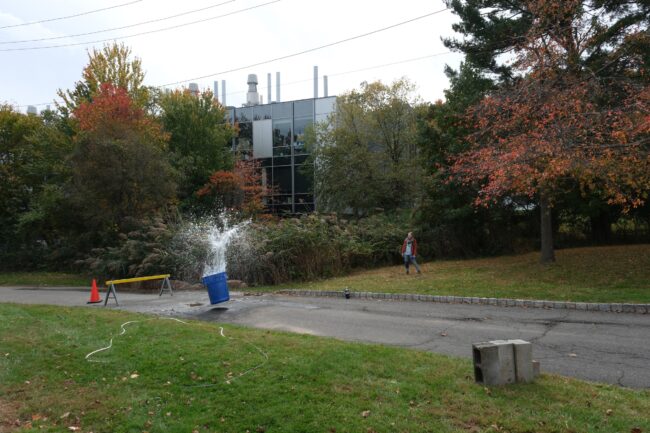
The annual crowd-pleaser, the trashcan volcano, once again sent spectators scrambling back to a safe distance. Using ping pong balls and liquid nitrogen, scientists recreated a Plinian eruption, the explosive type of event named after the Roman writer who described the eruption of Mount Vesuvius. Volcanologist Terry Plank offered a sweeter take with a chocolate volcano.
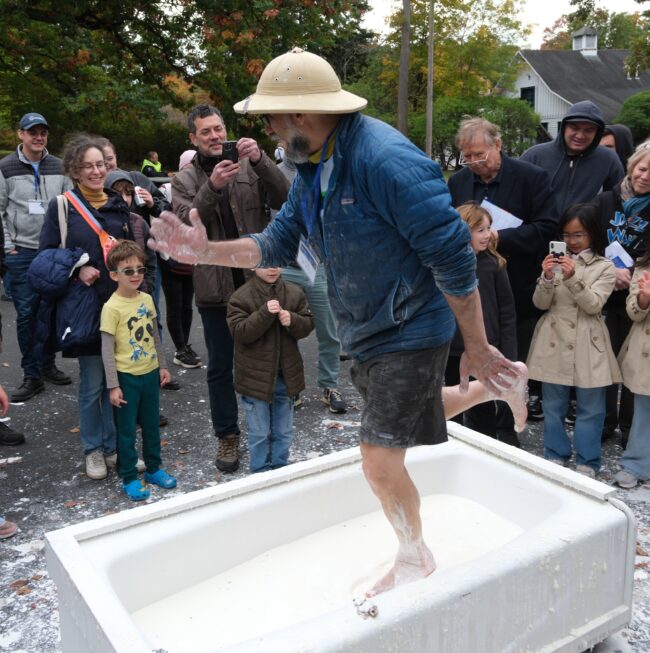
At the oobleck station, attendees plunged their hands into a mix of cornstarch and water to learn about rheology, the branch of physics that studies how matter flows and deforms. Geophysicist Marc Spiegelman delivered his signature “oobleck dance”, running across the surface of the mixture, which stiffens under sudden pressure, without sinking.
Other stops introduced visitors to the surprising range of aquatic life in the Hudson River, the climate secrets stored in tree rings at the Tree Ring Laboratory, and drone footage captured over an active volcano. Botanist and climate scientist Dorothy Peteet, who has studied wetlands and sediments for more than four decades, also shared her work with guests.
Climate change, decade by decade
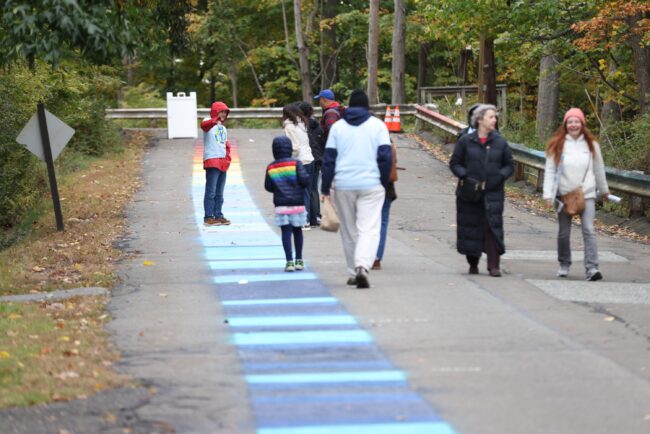
One of the most striking installations was a “warming stripe” walkway. As visitors moved along the path, its colors shifted from cool blues to warm oranges, translating long-term temperature records into a simple visual message about how the planet has heated up over the decades.
The lecture program leaned into the news of the year. Researchers spoke about artificial intelligence as a tool for scientific discovery, the deadly landslides and floods that struck the Nepal-China border region in August 2026, micro- and nanoplastics, New York City’s congestion pricing program and the historic El Niño now shaping weather patterns around the world.
Honoring Marie Tharp
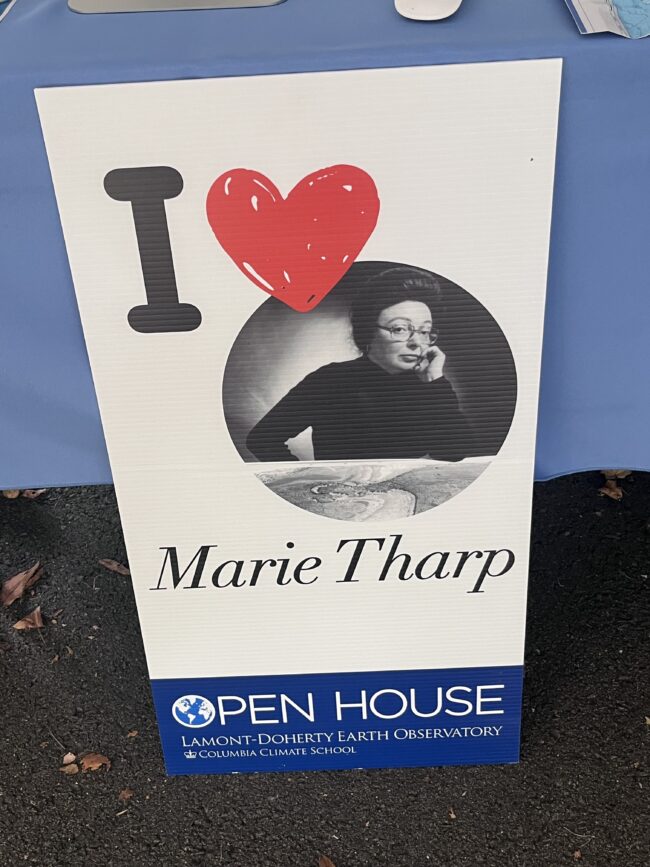
The observatory also paid tribute to Marie Tharp, the pioneering geologist and cartographer whose maps of the ocean floor, created at Lamont, helped build the case for plate tectonics. Visitors could try their own hand at seafloor mapping in an augmented reality sandbox, where each color represented a different ocean depth, and many were spotted carrying tote bags printed with Tharp’s famous map.
For the observatory, the event is a chance to open its doors and show the wider community how its scientists study the planet and the evidence they collect. Organizers have already signaled that the tradition will continue, with another Open House expected next fall.
Source: Lamont-Doherty Earth Observatory. Photos courtesy of Lamont-Doherty Earth Observatory.