[ad_1]
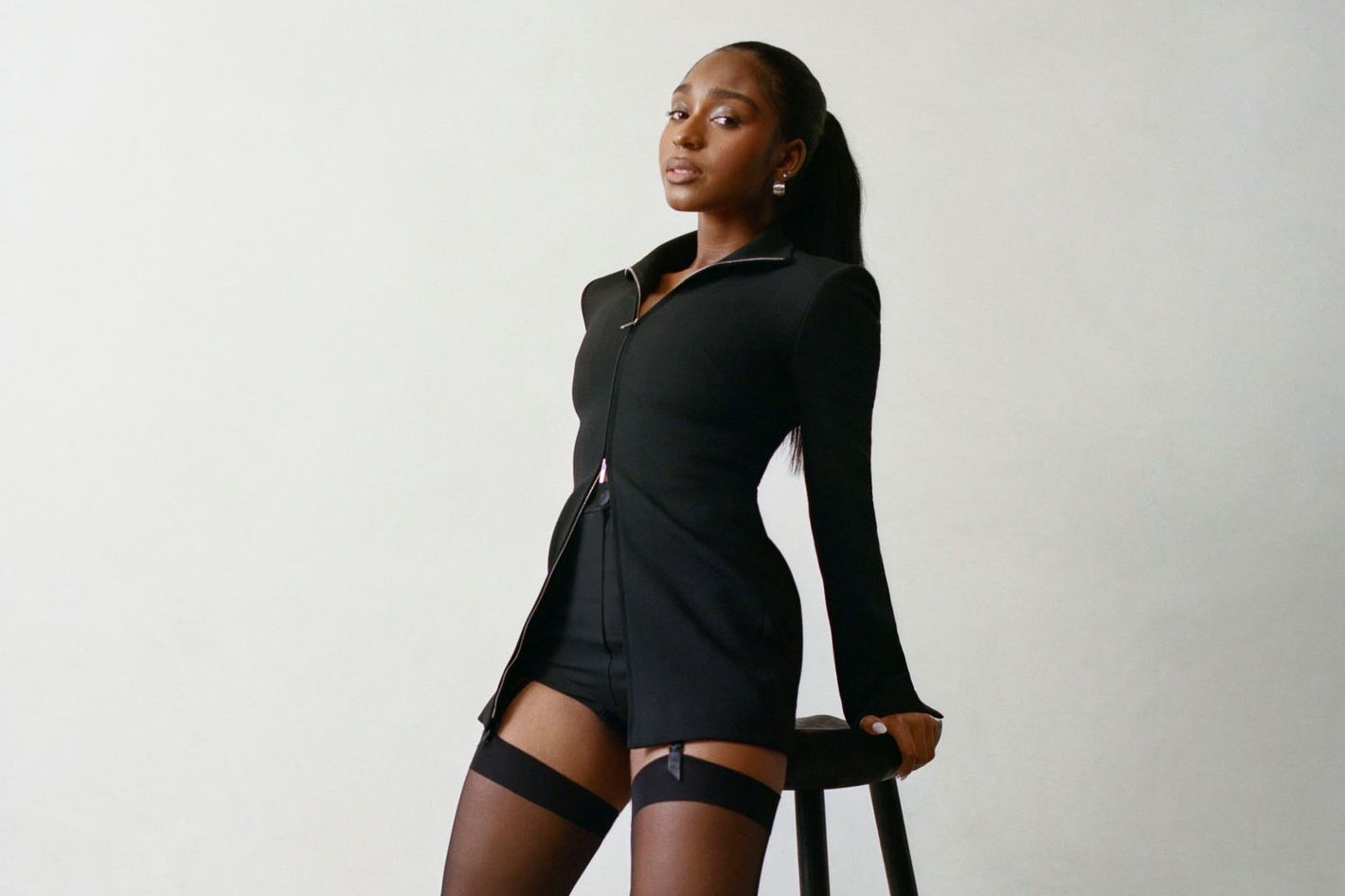
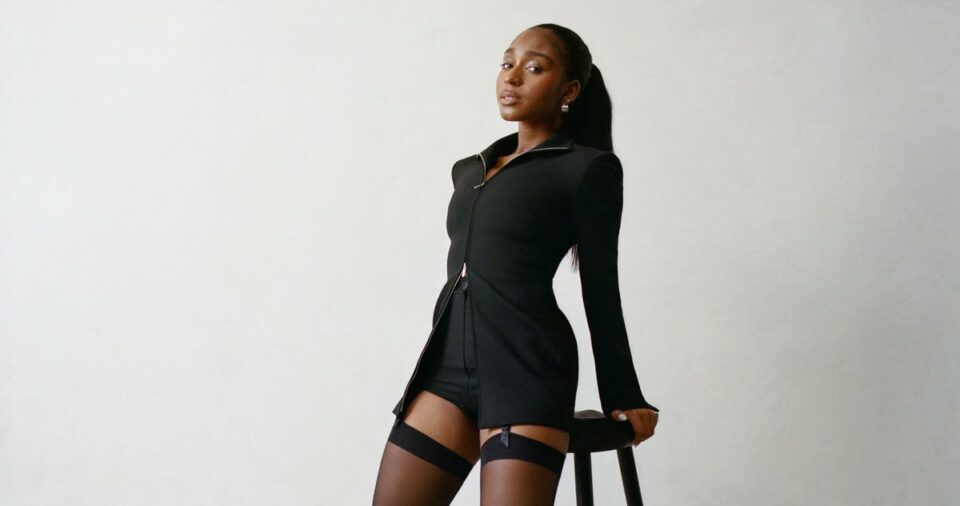
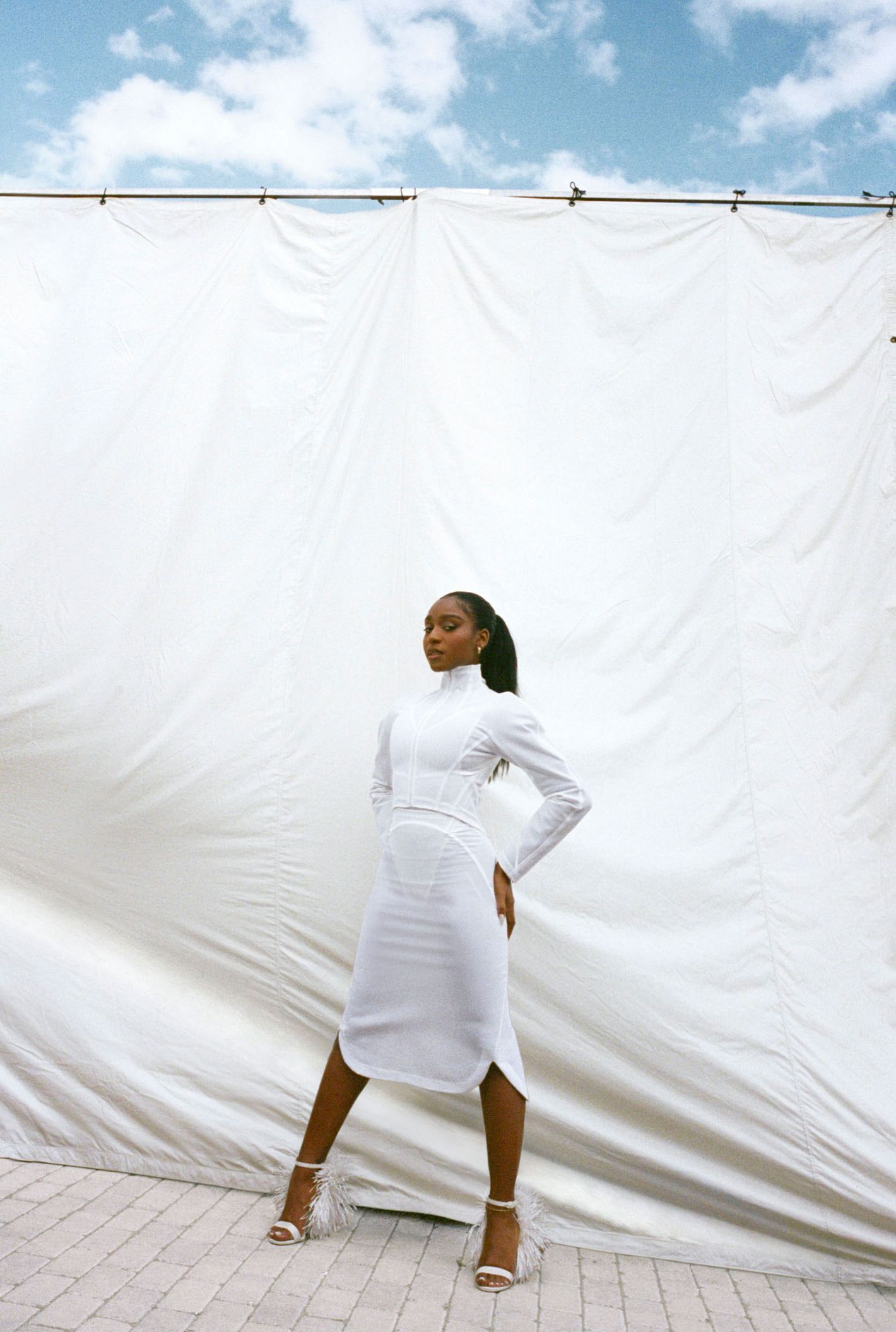
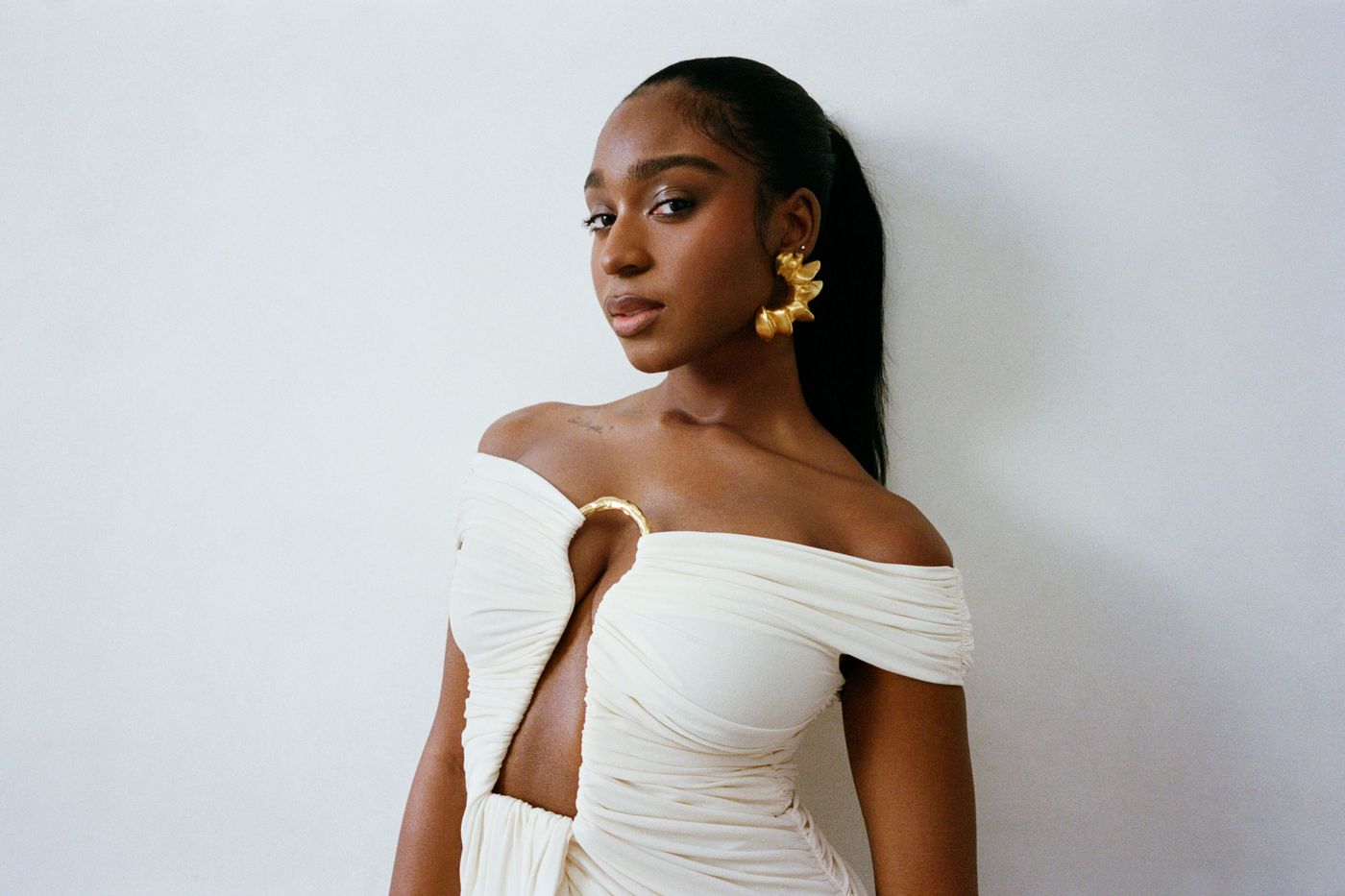
On an April afternoon in West Adams, a historically Black neighborhood in South Los Angeles, Normani emerges from a dressing room after several hours of fittings, swathed in cream and white. Andrea, her camo-clad mother, flits about the day’s photo-shoot set like a self-appointed creative director, checking screens to offer sporadic affirmations — “Oh, that’s good, Mani” — or candid styling suggestions — “Push her undies down so they aren’t showing!” The air is thick with banjos and Beyoncé shrieks. Lately, Normani has been listening to just two things: Cowboy Carter, presently playing in full for the second time this afternoon, and Dopamine, her long-delayed debut album set to release on June 14. Despite the throng of people assembled behind the monitor, Normani seems relatively at ease. She’s used to being looked at, after a decade in the spotlight, but is hyperconscious of the ways in which she is perceived. When unsure about a particular look or pose, she might ask, a few times, to see the image. When she feels good, she parts her lips, softens her expression, and tips her head toward the light.
In motion, Normani is uninhibited. She hangs from a chain-link fence and twerks in the video for “Motivation,” her 2019 debut solo single; twists from a handstand split into a concrete split in the pouring rain; pirouettes like a Beyblade, bounces a basketball off her knee, and glances it off her butt, then launches into two backflips and a front handspring, flashing a cheer captain’s smile. At the MTV Video Music Awards that year, she descended from a basketball hoop and executed Sean Bankhead’s slick, high-octane choreography with surgical precision, then started getting riffs off two minutes into the routine; when her outfit snagged in her stage partner’s hand, she tore it from her body herself and twirled into a jaw-dropping dance break.
The music had been glitching in her ear, and she couldn’t discern whether she was even on beat. “I remember getting off the stage and feeling devastated because I wasn’t able to lose myself in the performance,” she tells me over lunch the day before the shoot, picking absently at a bowl of fruit. “I don’t even recognize when I’m being really self-critical anymore,” she says. “It takes other people outside of me to point out what I’m doing well.”
This was her first true performance as a solo artist and marked a clean break from the girl she was when marooned in the 2010s best-selling girl group Fifth Harmony: often relegated to the background, rarely singing lead. It was also, by all accounts, a star-making turn — a genre of athletic, elaborate showmanship that belongs to a vanished era of firebrand entertainers, like Tina and Janet and Prince and Michael, faithfully emulated today by just a handful of ambitious performers (almost none of them men or white).
“Motivation” was dripping with self-assuredness; the music video signaled an aughts R&B revival with its airbrushed tees, low-rise jeans, and balmy 106 & Park allusions to Ciara, Beyoncé, Britney, and Ashanti (by way of J.Lo). The song hung around on the charts for ten weeks, was certified platinum by the RIAA, and was beloved by fans and critics; one Rolling Stone writer likened its buoyant, triumphant horns to the sound of a “pop superstar be[ing] born.” At the time, Normani was on tour with Ariana Grande, who co-wrote the song, and it seemed an optimal time to announce a first album. In September 2019, she went on the Zach Sang Show and suggested that the project was halfway done; a December cover story in The Fader said she was “just months out from the release.” Then: nothing.
Five years later, Normani’s truancy has ossified into an online meme. It was like she’d taken to heart that line from Yukio Mishima’s Star, when a jaded actor plays hooky on his own 24th birthday: “A star is more of a star if he never arrives.” The sentiment that coalesced online was that she was letting her moment pass her by, that she didn’t care about her fans, that, soon enough, everyone would get bored and move on. “No idea where Normani’s motivation (no pun intended) has gone, but I just don’t see the same passion from her as I used to,” one fan wrote on Twitter back in 2022 in a since-deleted post. “Before y’all start, it’s not depression so don’t even go THERE!” “What happens when you’ve gotten comfortable and you’re not HUNGRY anymore,” said another in a quote tweet. Normani’s abbreviated reply, which still remains on her X account: “Just shut the fuck up.”
It’s not that she wasn’t working on music — she has revised Dopamine four or five times, injecting it with more of the southern hip-hop and smooth-R&B flavor she grew up on. (She held songwriting camps in New Orleans.) “I could’ve put three albums out by now in that duration. I’m not oblivious to that,” she says. “But I felt like I owed it to myself to be able to take my time, and reinvent, and be experimental.” Fifth Harmony had no artistic control over their own music, she says. They were simply given records, then told to sing them. In the aftermath, Normani resolved only to release music that she could stand behind. She initially hated “Motivation” and all its pop refulgence. “I didn’t feel like it represented me,” she says, “and I’d already known how that felt. But the label was like, ‘Sorry, it’s coming out.’” (RCA declined to comment.) She remembers compromising with the music video, of which there are 50 edits: “This needs to be Black as fuck.”
Dopamine is named for the emotional roller coaster of her last several years, the peaks and valleys of a life she has mostly kept private. In 2020, Normani’s mother was diagnosed with breast cancer for a second time after being in remission for 19 years. The following year, just when Andrea had completed chemotherapy, doctors found a lump in her father, Derrick’s, prostate: He had cancer, too. Normani considers herself closer with her family than any of her friends. Suddenly, both her parents were fighting for their lives, while the public breathlessly demanded more pop songs. “You don’t even know the half of it. I was just like, ‘Fuck all of this,’” she says through tears. How does an artist craft shiny, escapist songs that make others feel sexy and invincible when their own life feels totally disconsolate? “I needed to be at home, with my family,” she says. She was living in L.A. at the time, far from her parents in Houston, but they both urged her to keep working on her album and not to defer a dream they’d all participated in since Normani was 3 years old.
“My mom was like, ‘I’m still going to be here the day you put that body of work out. I’ll be here at the end,’” she says. “And I held onto that.”

Normani Kordei Hamilton was born in 1996 to a mother who was a flight attendant and a father who was a union official. The family moved from Atlanta to New Orleans in 1999, and whenever her parents were away for work, her grandmother, Barbara, would take care of her. She was 3 when she fell in love with musicals. She remembers watching John Huston’s 1982 film, Annie, and turning to look at her mother, saying, “Mom, I want to do that, I want to be in the TV.” Her parents took her seriously and enrolled her in dance classes; it was Barbara who paid for them and sewed all of her costumes. By the time she was 8, she’d grown fond of the dance-focused music videos she’d see on BET’s 106 & Park and would do the choreography for Destiny’s Child tracks with her friends at birthday parties. (They were partial to “Soldier” and “Cater 2 U.”) Ordinarily, Normani was shy and quiet. But when she performed, she would become someone else.
She was 9 when the newscasters started warning of a hurricane. Her father was in Tennessee for work. Her mom had just returned from a long trip. At first, the reports seemed extravagantly cautious. To live in the coastal South was to be terminally braced for disaster with those warm, tropical winds rolling endlessly off the Gulf of Mexico like a pleasant threat. “Nobody thought it was going to be that bad,” Andrea remembers. On August 29, 2005, under the star-studded tarp of the 3 a.m. sky, Normani said good-bye to a friend who was sleeping over, dropped her off at home without knowing when they’d see each other again, and left with her mother, great-uncle, and grandmother for a family friend’s home in another part of Louisiana. In the morning, decades of federal hubris and neglectful policy were thrown into sharp relief. They awoke to the news that the unfinished storm-protection system in New Orleans had failed; that the levees had broken; that the city was flooded with waist-high dirty water. News footage showed bodies floating down the street. The Hamiltons had purchased their home just three months prior.
When they snuck back into the city to recover some of their belongings, her parents found the neighbor’s shed in their pool. Their family photos were all destroyed. There wasn’t much to take, but they took whatever they could, left behind the pet turtles, and decided to start over in Texas. “We were in the car,” recalls Normani, “and my mom asked, ‘Do you want to go to Dallas to see your godmother? Or to Houston? I hear Beyoncé is from there.’” She laughs. “That was the deciding factor.” In Houston, they stayed in a motel for four months, depleting their savings and stretching their food. Normani, who was entering the sixth grade, struggled to adjust in school and tried four before deciding to be homeschooled. The arrangement, though socially isolating for an already introverted girl, gave her the space to commit more fully to dance, gymnastics, and singing. Her mother would crisscross the States every weekend to bring her to dance competitions and shuttle her to Los Angeles for various auditions. (At 13, she briefly appeared on HBO’s Treme, as a child caught in a post-Katrina New Orleans.) She didn’t get into Kinder HSPVA, the performing-arts high school that Beyoncé attended, but she did get on X Factor, Simon Cowell’s music-competition series, in 2012 at age 15. The judges (Britney Spears, L.A. Reid, Demi Lovato, and Cowell) didn’t think she was ready for a solo career, but Cowell and Reid thought she had potential in a five-piece outfit. They merged her with four other young women, Dinah Jane, Lauren Jauregui, Camila Cabello, and Ally Brooke, who had also auditioned as solo artists, and had them sign a joint record deal under Reid’s label Epic Records via Syco Music, the same Cowell-owned label that backed Little Mix, CNCO, and One Direction.
Fifth Harmony became one of the most commercially successful girl groups of all time over a span of six years, selling 33 million records. For Normani, the group was a blessing that also traumatized her. She refers to her “time in the group” like a prison sentence ordered and duly served. She didn’t mind that her solo audition — she sang Aretha Franklin’s bluesy “Chain of Fools” — didn’t translate to an immediate solo career because she came of age as an acolyte of TLC and Destiny’s Child; it hardly felt like a rejection to be pitched as the 21st-century Spice Girls. “I didn’t want to be at the forefront,” she says, because she was grateful for the ability to hide. “It wasn’t until later that I started feeling like a token.”

One morning in the summer of 2016, Normani awoke to images circulating online of her face superimposed onto gorillas and lynched Black people, messages from strangers referring to her as “Normonkey,” and death threats in her inbox. “I remember going on social media and seeing my daughter’s face Photoshopped on bodies of people being whipped,” says Andrea. A few days before, Normani had casually described Cabello as “quirky” and “cute” in an interview, and a swathe of fans, who sensed tension between the girls, interpreted it as a dig. They responded with vitriol, singling out Normani, the only Black girl in the group. (Cabello’s social-media footprint later revealed racist posts of her own from the early days of the group; in 2020, Normani said, “It was devastating that this came from a place that was supposed to be a safe haven and a sisterhood.”) Fifth Harmony was on tour at the time, and nobody from Epic or Syco reached out to her. “We just continued to do shows, and I was fearing for my life,” Normani says. “But they continued to put me out there on the stage. It was pretty much like, ‘The show goes on.’” On one occasion, a fan who had threatened to kill her had to be ejected from a show. (Then shortly after Cabello’s sudden departure in December 2016, audio leaked of Jauregui complaining tearfully that the girls were overworked, “doing fucking labor every day and [seeing] nothing,” and being treated like “literal slaves.” In the summer of 2017, the four remaining members told an L.A. Times reporter they felt burned out and that the label was controlling them like “puppets.”)
The experience disfigured her relationship with the label, with journalists, with the other girls in the group, and with people calling themselves fans. “It was probably the lowest point for me,” she says of that summer. She was only 20. She and Andrea remember how people would come to meet-and-greets and walk straight past Normani, as if she didn’t exist. It rattled her sense of self and exacerbated her anxieties about being a Black woman in the public eye: She says she felt alienated and unprotected while also deeply exposed. “I have given so much of myself to you by choice,” she wrote on Twitter in August 2016. “I choose to let you in.” From then on, she chose not to and limited her online presence both on X and on Instagram.
Even today, she says, she prefers to leave social media to her management. Her posts have a cool, measured remove to them and rarely reveal too much about her personal life. “I’m not on social media,” she tells me, “but I do see a lot, and I’m very tapped into what y’all are saying.” Recently, one of her more popular fan pages, @NormaniNation, tweeted a screenshot of her Instagram, where Normani had just deleted all of her posts. “WHAT IS HAPPENING,” they wrote. People quickly noticed the screenshot showed the user was signed into Normani’s own account, suggesting that the artist or her team might be running her own fan page. “No, I mean, I’m definitely heavily involved,” she says calmly when I ask about her relationship to her fan accounts. But does she run any of them? Does her team at RCA? “Yeah, I think we can skip this question,” her publicist says.

Dopamine didn’t really start coming together until 2021. It was the thrumming bass, silky vocals, and loose, “One in a Million”–inspired drums of “Wild Side” that confirmed for Normani she’d finally arrived at a sound she felt she could own. It was the first song she made in the aftermath of her parents’ cancer diagnoses and the direct result of her mother urging her not to let her hiatus continue for too long. (Her parents are both now in good health.) “That time shifted the way I view and navigate life,” she says. “I don’t fear things the way that I used to.” In her previous tracks early into going solo, it sometimes felt as though she was trying on secondhand outfits, adopting the musical styles of the artists she split the songs with: The warm guitar licks and finger snaps on “Love Lies” belonged more to Khalid’s universe; those ambient synths and bass whomps on “Waves” had long been part of 6lack’s chilly, twilight language; and the summery, reggae-tinted club jams with Calvin Harris could have fit snugly on his Funk Wav Bounces Vol 1.
“Wild Side,” though, was nocturnal and assertive and grown and sexy but not so mature that it was above a playful line like “Fuckin’ it up like oopsie-daisy / Ain’t no ifs, and, buts, or maybes.” Normani believed in the song enough to fund the music video herself, which cost upwards of $1 million; it’s a psychedelic, gravity-defying montage of leopard print, crushed velvet, and acres of glistening skin that sees the singer phasing through ceilings, doing the splits in full leather, and dancing with a doppelgänger like the closing scene from Annihilation. In a standout moment, Normani and Cardi B embrace, nude, on a platform suspended by chains.
Her album telegraphs this same sultry, bossy energy. “1:59,” featuring Gunna, is an understated, downtempo R&B track built on a fuzzy, aughts-esque guitar loop and gorgeous vocal stacking; her delivery of “Turn me up” in the intro is reminiscent of how Aaliyah opens “Four Page Letter.” The song even gets a bridge, a distant relic in our era of music. “Candy Paint” is a braggadocio of a pop song with loose, bouncy idiophone percussion: “If you let me take him you may never get him back / I’m a baddie and I don’t know how to act,” Normani sings sweetly, like it isn’t really her fault. “Big Boy” scans like a love letter to the South with its cool bass line, leaping horns, and nods to Pimp C; “Tantrums,” one of her favorites, is spacious and atmospheric with a feature from James Blake. “I feel like a lot of people who’ve heard it are really surprised,” she says of the Blake assist, “but that’s the point — I wanted to be able to flex my taste.”
When we speak again a couple weeks later, she’s heading to rehearsals for the music video for Dopamine’s lead single, “1:59,” and has just spent the morning celebrating her mother’s birthday. “We’re just having a girl’s day,” she says, which in this case means brunch, an appointment with the lash tech, a manicure, and a massage. “She says she wants a tattoo,” she tells me with a flutter of laughter. “It’s funny because growing up, she was always like, ‘It’s not worth it to get your bellybutton pierced or to have tattoos. Your body is a temple.’” Normani has two: the bootlike outline of Louisiana on her right ankle, and the phrase “God’s Daughter” in script on her clavicle. Both were impulsive decisions. “Because I think so much and I’m so intentional when it comes to music-related things, or anything to do with my career, when it’s something outside of that, I allow myself to move before I can second-guess myself,” she says.
Normani has lived by herself for the last two years. “I really spend a lot of time alone,” she says. “And I’m happy with that.” She likes to go on solo dates: dinner at Nobu, the theater for a scary movie. When it comes to romance, though, she values the ability to surrender, to have someone else decide where to go to dinner. “I think it can be controversial when you say you like to be submissive, especially in this day and age of feminism,” she says. “But especially for me, being an alpha female — specifically in my work environment, where I’m having to lead and wear so many different hats — it’s nice to be able to come home and feel protected in my relationship. And to find stability in knowing that, there, I’m going to be led well.” Is that kind of man rare? “There ain’t nothing out here, chile,” she says. “I’m very blessed, but it’s scary times for sure.”
As for the album, Normani would be lying, she says, if she pretended not to feel the weight of so much anticipation. “For so long, I allowed music, numbers, and how successful I am define me,” she says. That’s another reason why Dopamine has taken so long: She needed time to actually live for herself. She was sheltered in her childhood by homeschooling, and it made her feel as if she were removed from other people. “I’ve always felt like I can hold a conversation, but, like, I’d rather not,” she tells me, laughing. “I have this anxiety when it comes to being seen too much or people seeing through me.” When she was about 14, just before she got on X Factor, she told her mom that she wanted to go back to school. It frustrated her that there was nothing she could relate to with kids her own age; most of her socialization happened in gyms and dance classes, where the lingua franca was judgment and criticism. “I never experienced my own prom, and I never went to football games. I don’t know anything about that,” she says. “I felt like I needed to experience things to actually be able to talk about them on a record, whether it’s my parents, or heartbreak, or even just being in tune with myself as a 27-year-old woman. There’s so much life I’ve lived in the span of creating this body of work.”
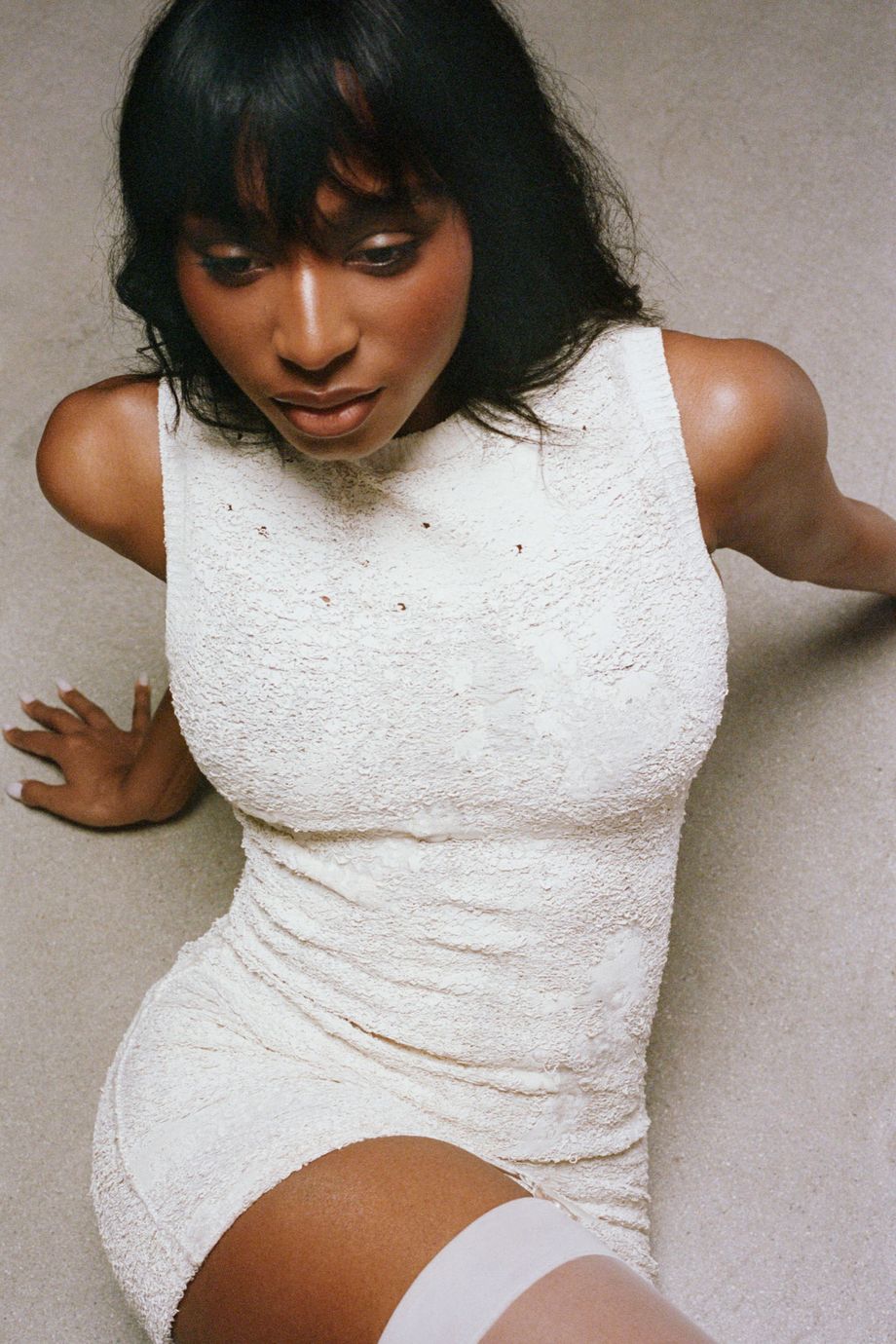
Production Credits
Photography by Jessica Madavo
,
Styling by Jessica Willis
,
Digital Tech Daniel Bray
,
Photo Assistants Jeremy Sinclair and Sandy Rivera
,
Styling Assistant Antonina Getmanova
,
Hair by Ashanti Lation
,
Makeup by Alexander Echeverri
,
Manicure by Chaun Legend
,
Tailor Susie Kourinian
,
Production Hinoki Productions
,
The Cut, Editor-in-Chief Lindsay Peoples
,
The Cut, Photo Director Noelle Lacombe
,
The Cut, Photo Editor Maridelis Morales Rosado
,
The Cut, Editorial Assistant Brooke LaMantia
More cut covers
- Kacey Musgraves Comes Down to Earth
- Paloma Elsesser on the Price of Being ‘First’
- Greta Lee Is Getting Used to This
[ad_2]
Connor Garel , 2024-04-30 14:00:46
Source link