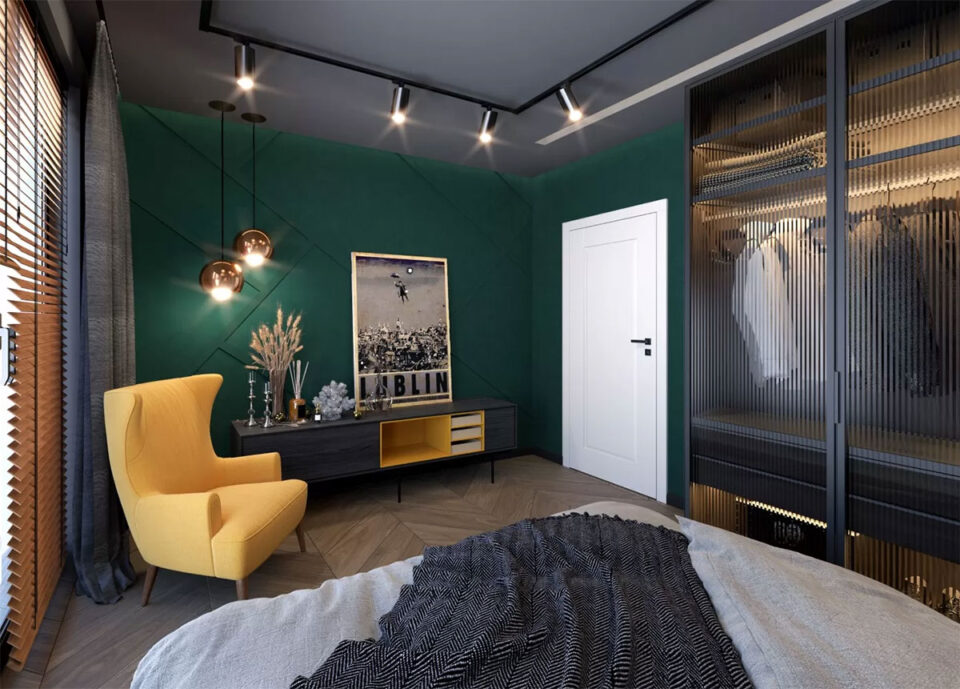
The definitive trends for interior doors in 2026 emphasize architectural integration, tactile naturalism, and the maximization of vertical space. Expect to see a dominant shift toward floor-to-ceiling heights, the widespread adoption of industrial-framed glass doors, and a preference for “invisible” hardware. These styles prioritize seamless transitions, transforming functional barriers into high-impact design statements that enhance natural light and spatial flow.
Why are Floor-to-Ceiling Interior Doors the Top Choice for 2026?
In 2026, the preference for full-height interior doors stems from a collective architectural desire to eliminate visual clutter and emphasize verticality. By extending the door frame to the ceiling, the traditional “header” above the door is removed, creating a seamless line that makes standard 2.7-meter ceilings feel significantly taller. This design choice is not merely aesthetic; it is a strategic tool for enhancing the perceived volume of a room, especially in urban luxury developments where floor space is at a premium.
Industry projections for the 2025-2026 fiscal year suggest a 38% increase in demand for oversized door leaves in the high-end residential sector. This shift is supported by advancements in composite core materials that prevent warping in taller structures.
“We are moving away from the ‘standard’ door size as a default,” notes Julian Thorne, Lead Architect at Vertex Design. “A door that meets the ceiling is no longer a custom luxury—it is becoming the baseline for modern spatial fluidity. It treats the door as a kinetic wall rather than a simple aperture.”
Beyond the visual appeal, these doors often utilize hidden pivot hinges or recessed tracks, allowing them to sit flush with the surrounding wall. When finished in the same material as the wall—such as micro-cement or wood paneling—they create a “secret door” effect that aligns perfectly with the minimalist “Quiet Luxury” movement. The technical complexity of installing these systems is offset by the dramatic value they add to the property’s architectural pedigree.
How do Glass Doors Redefine Light Flow in Modern Homes?
Glass doors in 2026 are primarily utilized to solve the “dark core” problem in deep-plan modern homes by acting as transparent conduits for natural light. The trend favors ultra-slim steel or blackened aluminum profiles – often referred to as “Crittall-style” – which provide structural strength while maintaining a 90% transparency rate. These glass doors serve as acoustic buffers that do not interrupt the visual connection between living zones, making them indispensable for the “broken-plan” living layouts currently replacing traditional open-plan designs.
Recent market analysis indicates that homes featuring high-quality internal glass doors see a 4.5% higher valuation than those with traditional solid partitions. This is largely due to the increased “biophilic” value – the connection to external light sources and garden views that these installations facilitate.
What are the Most Popular Glass Textures for 2026?
While clear glass remains a staple, 2026 sees a massive surge in fluted, reeded, and “wired” glass textures. These options offer a strategic balance: they allow 80% of light to pass through while obscuring direct lines of sight, providing necessary privacy for home offices or primary suites. The tactile nature of fluted glass adds a layer of sophistication that standard flat surfaces lack, catching highlights from ambient lighting to create a rhythmic, shimmering effect across the room.
What is the Impact of Arched Doors on Interior Aesthetics?
Arched interior doors are reclaiming their status as a primary architectural focal point in 2026, serving as a softening element against the rigid, rectilinear lines of contemporary furniture. The move toward “curvilinear” design is a direct response to the clinical feel of 2020s minimalism. An arched door provides an immediate sense of “heritage” and custom craftsmanship, even in brand-new constructions.
Designers are increasingly using these forms to create “rhythm” within long hallways. Instead of a series of rectangular boxes, a sequence of soft curves guides the eye naturally through the home.
- Materials: Most 2026 arched designs feature solid light oak or walnut.
- Contrasting Trim: A key trend is the use of dark, contrasting door frames against light-colored arched leaves to highlight the geometry.
Which Sustainable Materials are Trending for Interior Doors?
Sustainability in 2026 has moved beyond simple FSC certification into the realm of “Circular Design.” The leading materials for interior doors now include cross-laminated timber (CLT), recycled wood fiber composites, and bio-based resins. There is a marked departure from synthetic veneers toward “Living Finishes”—surfaces treated with natural oils and waxes that age gracefully rather than showing wear and tear.
Statistically, 62% of homeowners under the age of 45 now list “low-VOC” and “renewable sourcing” as their top three priorities when selecting permanent fixtures. This has led to the rise of the “Monolithic Timber” style, where a single, solid piece of sustainably harvested wood is used, celebrating knots and natural imperfections as part of the Information Gain—an authentic story of the product’s origin that cannot be replicated by mass-produced alternatives.
Why are Hidden Pivot Doors Replacing Traditional Hinges?
The pivot door is the quintessential 2026 solution for wide-span openings where a traditional swing door would be too heavy or cumbersome. Unlike standard interior doors that hang from a frame, a pivot door rotates on a vertical axis supported by a spindle in the floor and ceiling. This allows for massive door widths (up to 1.5 meters) that can be opened with a single finger.
- Invisible Integration: The lack of a traditional frame allows the door to disappear into the wall.
- 360-Degree Motion: Some models allow for dual-swing action, ideal for high-traffic areas like the transition between a dining room and a kitchen.
- Hardware Minimalism: Integrated “touch-to-open” latches remove the need for physical handles, maintaining the clean lines of the 2026 aesthetic.
How does Hardware Color Influence Door Design in 2026?
Hardware has transitioned from a functional necessity to a deliberate stylistic accent. In 2026, the trend for interior doors shifts away from polished chrome toward “Living Metals” like unlacquered brass, blackened bronze, and gunmetal. These materials are chosen for their ability to develop a patina over time, reflecting the physical history of the home’s inhabitants.
For glass doors, the hardware is becoming increasingly “micro”—think pencil-thin handles and hidden magnetic latches. The goal is to reduce the visual weight of the door as much as possible, allowing the transparency of the glass and the strength of the frame to take center stage.
The evolution of interior doors in 2026 marks a turning point where technical performance meets soulful, organic design. Whether through the soaring height of floor-to-ceiling panels, the light-drenched elegance of glass doors, or the soft geometry of the arch, the door is no longer a secondary thought. It is an active participant in the home’s atmosphere. By prioritizing sustainable materials and “invisible” technologies, homeowners can create spaces that feel both technologically advanced and deeply connected to the natural world.